Networking Her Way to Impact: Melanie Klym’s Job Search Success Story
Share
Career pivots rooted in relationships can often lead to meaningful work. On this bonus episode of Find Your Dream Job, Melanie Klym, Northwest River Restoration Director at American Rivers, shares why she loves protecting rivers across the Pacific Northwest. She also reflects on how she knew it was time to leave private engineering consulting and move into the nonprofit sector to expand her impact and better align her work with her values.
Melanie talks through the job search habits that have shaped her career path, including informational interviews, volunteering, and working with mentors over time. By reaching out to people she admired, staying curious about different career paths, and building relationships before roles were posted, she found a position that was a strong fit. Her takeaways for job seekers: focus on people, stay engaged in your community, and think of networking as something you do throughout your career — not just during a job search.
About Our Guest:
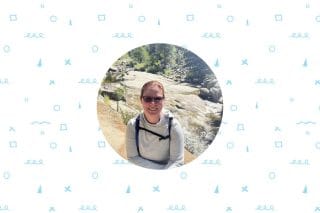
Melanie Klym is the Northwest River Restoration Director at American Rivers.
Resources in This Episode:
- Connect with Melanie on LinkedIn.
- To learn more about Melanie Klym’s job search, visit macslist.org/stories.
Transcript
Find Your Dream Job, Bonus Episode 88:
Networking Her Way to Impact: Melanie Klym’s Job Search Success Story
Airdate: January 5, 2026
Mac Prichard:
This is Find Your Dream Job, the podcast that helps you get hired, have the career you want, and make a difference in life.
I’m your host, Mac Prichard. I’m also the founder of Mac’s List. It’s a job board in the Pacific Northwest that helps you find a fulfilling career.
One of the best ways to get good at job hunting is to talk to people who do it well.
That’s why once a month, I interview a Mac’s List reader who found a job they love.
Our guest today is Melanie Klym. She’s the Northwest River Restoration Director at American Rivers.
It’s a nonprofit that works to safeguard the 4.4 million miles of rivers and streams in the United States.
Melanie joins us from Corvallis, Oregon.
Melanie Klym has seen firsthand the difference a network can make in a career.
In a story you can find on the Mac’s List website, Melanie says that her professional connections helped her pivot from the private to the nonprofit sector and find the job she has today.
Why do you love your job, Melanie?
Melanie Klym:
Yeah, thanks, Mac. I love working at American Rivers, where I can really use the combination of my talents, skills, and experience to make a really meaningful impact and difference in our communities. Everywhere in the Northwest, the rivers are so important to our life, to our livelihoods, to our wildlife, to our health of drinking water. And we have about 9,000 dams in Oregon and Washington alone.
And many of those are impeding those important river processes that support healthy communities and abundant wildlife. So in my role as the Northwest River Restoration Director, I get to engage with people and identify dams that are obsolete, no longer serving a purpose, or there’s an option to meet the need, like a water diversion in a lower-impact alternative.
And by restoring the free, cold, clean water, by removing the dam, we can have such a positive impact on river health with a really minor intervention.
Mac Prichard:
Well, let’s talk about your job search. What was the biggest challenge you faced?
Melanie Klym:
The biggest challenge I faced was that I had been in private consulting for 15 years as a licensed professional engineer and a registered geologist. And making the pivot, I decided I wanted to scale up my impact beyond the projects I could do as a consultant.
And that pivoting to either state service or nonprofit, I’d have the ability to impact a larger scale, a regional scale. But I had no experience working in either of those sectors. And so it was a pretty big jump into the unknown of going from my entire career in Oregon that had been private engineering into something different, and having the confidence to figure out what that next thing was definitely the biggest challenge.
Mac Prichard:
And how did you manage that challenge, making that switch from being an engineering consultant to the nonprofit sector?
Melanie Klym:
Yeah, as a consultant and also just as an engaged community member, I’ve had the opportunity to work with and for many mission-based organizations and many public agencies. And so I pulled out my network. I called up people who I enjoyed working with in my prior role or who I had met through my volunteer efforts with watershed councils or with professional organizations, and just had a series of informational interviews.
I kind of reset to what I was doing when I first came to Oregon, which was, “It looks like you do something cool. What do you actually do? Do you enjoy what you do, and how did you get to do it?” And had some great conversations that really helped guide me to finding where that best fit would be next.
Mac Prichard:
How did you learn how to do that, both at the start of your career when you were coming out of AmeriCorps and then continue to improve your informational interviewing and networking skills as you moved through your profession?
Melanie Klym:
Yeah, I read a lot of research articles. I definitely read some great advice on your website. I take learning very seriously. I identify as an outgoing introvert. So, calling people up and having conversations is immensely terrifying. But I also learned through experience that it was very rewarding.
And I first started having these conversations when I was an AmeriCorps volunteer, when I hadn’t yet made the pivot to private consulting. And I didn’t even have an engineering degree at that time.
And I met people through the River Restoration Northwest professional organization who were doing great things. And then I found out they were engineers. I was like, okay, maybe that’s what I want to do. But it was really just through practice and having the confidence that these conversations weren’t scary.
Most people that I was approaching enjoy what they do and are happy to talk about it. And that’s something I’ve learned as I’ve progressed in my career. I’m always happy to have a conversation with an early-career professional or someone who’s later in their career but looking for a pivot, and sharing those experiences.
So I think the repeated exposure to a very supportive and friendly community made it less scary overall.
Mac Prichard:
In your article for us on the Mac’s List website, you also talked about the value of volunteering. You got involved with local watershed councils. How did that volunteer experience shape your career?
Melanie Klym:
Yeah, I started out, you know, I came to Oregon as an AmeriCorps volunteer, and it really had that service ethic ingrained in my job at that time. And through that, I met in Portland, the Johnson Creek Water District Council stewards, a really important salmon-bearing stream that flows through different counties, and I could talk all about it.
Anyways, started volunteering with them, met some really great community members, and sort of the same thing, like, what are you doing when you’re not pulling ivy? And then through that, I was invited to join the board of directors, and I served there for 10 years. And actually being on the board of directors gave me a lot of experience in leadership in a way that I didn’t have in my day job because I was still pretty new in the engineering community.
But in the 10 years that I was on the board, I eventually was the chair of the board. And so I had the experience of convening people and working towards consensus and managing agendas and figuring out if the conversations are going in a different direction, either how to redirect.
And I also got a lot of exposure to really great mentors through the volunteering events because we were there with a common purpose. And then it was an opportunity to get to know them and then continue that conversation outside of, you know, the volunteering.
Mac Prichard:
How do you typically work with mentors, Melanie, and how have they helped you in your career, particularly in this recent switch?
Melanie Klym:
I think I’ve identified mentors as people who are making the type of impact that I want to have, and then approaching them and asking if they’d be willing to have chats occasionally or meet up for coffee or lunch.
And I take it seriously when I’m the mentee to provide value back to the mentor. They’re making time, they’re sharing their experiences, and whether that’s connecting them with other people who I might know through my network or sharing articles that I think they might be interested in.
I have a pretty strong little leadership book club now going on, where we all share book references and ideas and those conversations. So it’s definitely a partnership rather than asking for something in the relationship. And I also think it’s really important to establish those connections before you need a job recommendation.
And so in this current role that I’m in, I had actually reached out to the person who’s now my boss and had one of those informational interviews because she had worked at local watershed councils, she had worked at state agencies, and now she was working at a national nonprofit.
And those are all things that I was considering in my career pivot. And so meeting with her and hearing about her experiences was really valuable. And I think ultimately, it was part of the success of me finding this role at American Rivers.
Mac Prichard:
It is striking reading your story on the website, how informational interviews, volunteering, mentors, they all became lifelong career habits for you. How have those habits, and you touched on this a moment ago. Talk about how those habits helped you both here and get the position you have now.
Melanie Klym:
Yeah, that’s a great question. I think that I really value one-on-one connections, being an introvert, but learning to be outgoing in public situations. I really value the individual follow-up and maintaining that connection.
So having those connections, having access to those leaders in the field when I need advice or when I’m making a big decision about a big pivot, I have a pretty strong cadre of people who I can call up and get their perspectives.
Really valuable early career mentorship was Dr. Janine Castro. She’s the founder of the Portland State Environmental River Restoration Certificate Program and a big leader at the US Fish and Wildlife Service, like really pushing the advance of river restoration in the region.
And the fact that I got to meet her and gain insights about her career, she was the person who told me, because I asked her, “What would you do differently? Like, if you were where I’m at right now, what would you do?”
And she is a geomorphologist. And she said, well, “I think I might become an engineer.” And I was like, oh. And so that’s what set me on the track. I was in geomorphology and geology. But talking with Janine is what set me on the track to really become a professional engineer and really lead those designs.
And she ended up writing a letter of reference for Portland State University, where I got my master’s degree in engineering that allowed me to then become licensed and pursue that career in private consulting.
And so last year, when I knew I wanted to make a big pivot, I asked Janine if she’d be willing to talk to me and share her insights and experience. She had worked in the federal service and, you know, her experience in public agencies was really valuable in giving me insights of what that would look like for my next career step.
Mac Prichard:
And how did you know last year that you were ready for a pivot?
Melanie Klym:
I was reaching the point as a senior engineer where my billing rate was such that I didn’t have the opportunity to really get out in the field as much and really be hands-on engaged with the projects.
And I was getting a little frustrated that, because of the billing situation and budgets, I wasn’t able to engage with as many partners and projects as I wanted to. And so I knew that if I wanted to be able to get kind of back in the ground level of project development and supporting partners, I needed to do something different.
And I didn’t know whether that would be public service, because there are a lot of people in the state, especially, who do that early project development, early assistance, and connecting with private landowners about projects. But coming at it from a government agency, there’s some hesitation for some people of having state agents on their land.
And so I decided that on the private nonprofit side, I’d probably have better access to reaching more people and making a bigger impact. And that was my main motivation, that I felt I had enough skills and experience and talents, and I wanted to use them to really make the most positive impact I could. And I felt that consulting wasn’t going to get to the scale of impact that I wanted.
Mac Prichard:
So that’s why you made the career pivot. How did you find out about the position at American Rivers?
Melanie Klym:
I’ve known American Rivers for a long time. Right when I came out to Oregon was right after the Marmot Dam was removed off the Sandy River. And that was a huge, exciting thing. And so dam removal has been on my radar since then. And American Rivers is the national leader in dam removal.
So I’ve been very aware of them and then realized, you know, when I was ready to make this pivot, that Sarah, Sarah Dyrdahl, is actually, you know, working at American Rivers. And so when I met her for that informational interview, I asked her more about her experience with American Rivers and she let me know that they were going to be hiring a position and that she was still working on the position description.
The timeline was a little bit unknown, but that really piqued my interest because then I was like, this opportunity might actually really well align with my timeline and my pivot and my transition. And so I became aware of it then, and I also was applying to multiple other positions. I ended up applying to some watershed council executive director positions and then Soil and Water Conservation District as well. So really different sizes of organizations.
The Soil and Water Conservation Districts are kind of semi-governmental because they’re, you know, the county tax-based association. And then American Rivers was definitely my top choice, though, of having that access to national resources and national impact and bringing that to the states of Oregon and Washington.
Mac Prichard:
So those are things that worked in your job search, Melanie. What didn’t work in your job search?
Melanie Klym:
Waiting for positions to be posted. I’m a huge advocate of finding if there’s someone who’s doing something that you think looks interesting, talk to them, and find out more about that position. I know in private consulting, a lot of the times, most of the hires weren’t from posted positions. So, waiting for positions to be posted and being kind of passive and reactive about it, I think, is a really ineffective job search strategy.
It’s very helpful though to when you’re looking or when you’re thinking and kind of I do this all the time like I’ve been subscribed to your list for a while even before I decided that I wanted to pivot to non-profit because it gave me insights into what types of organizations are hiring, who’s growing, what sort of roles are they looking for and then that could help with those informational interviews of having that connection, having that conversation before a position is posted.
Because it really helps you decide if it’s a good fit, if you want to actually work there. Because when you’re applying for a job, you get really excited about the position description, and you kind of have that honeymoon phase. But it’s really nice to have insights into the actual organizational culture before you’re looking at an application.
Mac Prichard:
Finally, Melanie, what’s your number one job hunting tip?
Melanie Klym:
My number one tip is make connections. Make connections with your community, either through volunteering, if you have the means, attending professional events, or finding people on the website.
Many people are really happy to talk about their career experience and help support people, especially in the environmental field, for making an impact. So just find those connections and sustain them.
Mac Prichard:
Thank you for sharing your story, Melanie.
To learn more about Melanie Klym’s job search, visit macslist.org/stories and check out the Mac’s List website for dozens of other success stories.
On the second Friday of every month, we have a new interview with a Mac’s List reader who has found a dream job. Go to macslist.org/stories.
In the meantime, thank you for listening to today’s bonus episode of Find Your Dream Job.
This show is produced by Mac’s List.
Susan Thornton-Hough schedules our guests and writes our newsletter. Lisa Kislingbury Anderson creates our transcripts and manages our social media.
Our sound engineer and editor is Anna McClain. And our music is by Freddy Trujillo.
This is Mac Prichard. See you next week.
###