You’re Not Alone: Using Mentorship to Pivot, Progress, and Land Your Next Job
Share
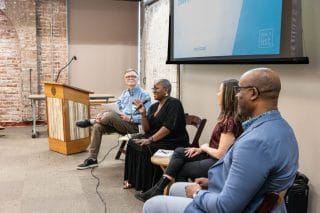
More than 120 job seekers, students, and community members gathered at the Ecotrust Building’s Billy Frank Jr. Conference Center in Portland on Thursday, May 7, for a conversation about one of the most important aspects of the job search: mentorship.
Hosted by Mac’s List and presenting sponsor Portland State University, You’re Not Alone: Using Mentorship to Pivot, Progress, and Land Your Next Job featured a panel of career coaches, HR leaders, and executives. Here is a recording of that event.
About Our Guests:
- Gina Riley, Executive Career Coach, Gina Riley Consulting
- Ed Johnson, Chief Executive Officer – Community Health Centers at OHSU and Board Member of PSU Foundation
- Tia B. Coachman, Founder and Chief Executive Officer at Affirma Consultancy
Transcript
Find Your Dream Job, Bonus Episode 92:
You’re Not Alone: Using Mentorship to Pivot, Progress, and Land Your Next Job
Airdate: June 8, 2026
Mac Prichard:
Four times a year, Mac’s List hosts public events in our hometown of Portland, Oregon.
This allows local employers and professionals to learn from HR leaders and job-search experts and to make new friends and connections.
We recently teamed up with Portland State University to host a panel discussion about how mentorship can help you pivot and progress in your career and land your next job.
Here’s a recording of our conversation.
Thank you, everybody, for joining us tonight. And we’re grateful to Portland State University for being our presenting sponsor.
I also want to thank our gold sponsor, Gina Riley Consulting, our silver sponsor, Edward Jones, and our community partners, the Center for Women’s Leadership, the Nonprofit Association of Oregon, PDX Women in Technology, Uplift Leadership, and the Young Nonprofit Professionals of Portland.
And special thanks to my coworkers at Mac’s List, Joanie Wang, Lisa Kislingbury Anderson, and Susan Thornton-Hough.
Okay, let’s get going. Again, I’m Mac Prichard. I’m the founder and CEO of Mac’s List.
We’re a regional job board that serves employers and job seekers in Oregon and Washington State. Our mission is to help you find work that matters and make hiring more human.
We do this through our job board and a free newsletter that goes out every Tuesday with that week’s new jobs. We not only want you to know about jobs, but we also want to help you improve your job search skills. So our website offers lots of free career advice.
You’ll find articles, guides, and a weekly podcast, Find Your Dream Job. We also host events like this. You can learn more about all of these resources by visiting our website, macslist.org. Here’s our program for tonight.
We’re gonna hear from our panelists for 30 minutes. Then we’re gonna turn to you in the audience and take your questions for 20 minutes. Okay, let me introduce our panelists.
- Ed Johnson is the chief executive officer of the Community Health Centers at the Oregon Health & Science University. He’s also a board member of Portland State University Foundation.
- Gina Riley is an executive career strategist and the founder of Gina Riley Consulting. She’s also the author of the new book, Qualified Isn’t Enough: Develop Your Story. Land the Interview. Win the Job.
- Tia B. Coachman is the founder and chief executive officer of Affirma Consultancy. Previously, she was the director of people operations at Laundry Service, an advertising company, and a human resources manager at Weiden + Kennedy.
Okay, let’s talk about mentoring and how mentors can help you get a job or change careers. And we’ll begin with you, Gina.
You’ve described the current job market as crowded. Why?
Gina Riley:
The reason why we say that it is crowded is that there are more applicants. There are complicated applicant tracking systems, hundreds of them, that we can’t account for how every single one is programmed and works.
And we have people applying and using AI-generated resumes that clog up these ATS systems and make it really challenging for recruiters to cull through them to get to the top ones to make those phone calls. And so.
Part of the message I hope that you’ll walk away with today is that there are other ways. There are better ways. There are ways to create that serendipity. And part of that is being here tonight. So I’m excited to talk with you.
Ed Johnson:
And it’s nebulous, we think about the work environment and wanting to, you have the skill set, and you want to show up at the interview, or you want your resume to be, to speak your truth and show value. But the reality is it’s uncertain in terms of, well, what will actually happen?
When you send the resume out, you know, will they see you for who you really are as you’re presenting yourself, either you’re emailing the resume or sharing it with a colleague, or it could be a best friend who has an opportunity.
And so it seems a bit cloudy, a bit nebulous, because you’re uncertain. But ultimately, you know, we all end up finding a job. It’s not, you know, the clouds, they fade away. The sun comes through, and we feel that joy; we get the job, and we’re satisfied with having that.
Mac Prichard:
Well, let’s talk about a theme that came up in our conversation as we prepared for this panel discussion. And that’s don’t wait to be picked. And let’s talk about how mentoring and mentors can help you get a job or change careers.
And I want to start with you, Gina. One of the mistakes you told me that you see people make is waiting to be picked, or as you put it, waiting to be plucked from obscurity.
Why doesn’t good work alone help you get noticed by mentors or employers when you’re applying for a job?
Gina Riley:
Yes, that’s one of my catchphrases. Don’t wait to be plucked from obscurity because nobody’s coming to rescue you. Nobody cares about your career more than you do.
You have loved ones, you have friends, you have people who do care about you, but you’ve got to take control of your narrative, and you can help yourself by building relationships with people who can help you. And it’s not about I’m looking for a job, I’m looking for a job. We all know that we’re looking for a job.
But it’s about coming together with people who have advice, support, and information that can help inform how we’re going about our job search strategy so we can modify it, modify our approach, and navigate really choppy waters. It’s a support system.
Mac Prichard:
But say more, Gina. I agree with everything you said, but how does that apply to mentors? So we’re looking for mentors, whether we’re doing a job search or in our careers. Why can’t you wait to be noticed by mentors? Why?
Gina Riley:
Thank you for clarifying. Mentors are someone that you should be building an intentional relationship with.
Sometimes we happen upon people who become a mentor, but the shift tonight that I want you to walk away with is to think about who a couple of those people could be, and think of each of those people as being somebody who has a different skillset or background.
So I come from a world of HR, as does Tia. And I know a lot less about the finance function. I’m not a technical person. I’m not an operations leader.
And so if I were navigating a job search today, maybe I would want to find people who can inform the way that I’m going about my job search by enlisting mentors and asking them expressly to be a mentor and letting them know exactly what I need out of the relationship.
Because if you are a mentee, you own the relationship. The mentor does not.
Mac Prichard:
Okay, so don’t be shy, know what you want and ask for it. Tia, do you have advice about how to make yourself visible to mentors who you want to get in front of or you might hope will notice you, but what can you do instead of waiting to be blocked from obscurity?
Tia B. Coachman:
You’ve got to say the thing. You have to say the thing. I shared with someone, Jessica, earlier today that when I walked into this room, I had deja vu because I remembered the moment that I decided to leave my job and start my business in 2019. I did it on a panel in this room.
I said the thing. And there were people in that room who, over the last seven, eight years, became my clients who supported me on my journey. But it’s because I said the thing. What’s the thing you have to say? No one can say that for you. No one can design that for you. You have to design it, but then you’ve got to say it.
And you have to find the people who are going to help you get there. Not the people who are going to tell you about what you got going on right now. I know this might be a question that you ask later, but there are differences between people who are your mentors, versus people who are your therapists, and people who are your coaches.
And you might need all three in your life, for sure, for sure. But your therapist is focused on how you got to where you are from your past. They’re going from the past to the present. A coach is going to be focused on getting you from where you are right now to where you want to go in the future.
But a mentor is someone who’s standing in this space with you right now. Right. And they are sharing with you how they did it. They’re sharing with you what resources they have to offer. Right. They’re sharing with you what knowledge, right? Or what skills you might need to develop to get to where you want to be. But they’re in the moment with you.
You gotta find those folks who wanna be invested in your now. But they won’t be unless you tell them what they’re investing in. So you gotta say the thing. Yeah?
Mac Prichard:
So say the thing, and Ed, know that one of the tips that you’ve shared with me is that to find the person who’s doing the job you want, they can be an excellent mentor. Why use that? Why?
Ed Johnson:
Yeah, because you want to learn from someone who has been successful in that field. You know, I’ve worked with mentors and with mentees throughout my career, and you want to be able to, and I’ve had PSU alumni, at least an alumnus, reach out to me via LinkedIn and said, ” Hey, I want to get to know you better. I want to know why you do what you do.”
And definitely when you find someone who actually does that job and does it well, they can provide you with the depth of knowledge and experience and answer all your questions so that you know if you do want to transition into if it’s finance, it’s healthcare, if you want to be an entrepreneur, whatever that field is, they can give you the inside scoop to how to be successful and what you need to know.
Mac Prichard:
Two quick follow-up tactical questions, kind of nuts and bolts, but how do you find that person? And especially if you’re new to the field. And second, how do you approach them so that they’ll say yes? Why are they gonna make time to talk to you?
Ed Johnson:
Someone make a plug for, think, PSU Works. So if you’re a PSU alumnus, there is a way to kind of get connected with a mentor. Also, again, there was an alumnus at PSU who found me on LinkedIn and said, “Hey, I’m interested in meeting with you.” And so we have to be intentional about trying to create that connection. And then the second question, sorry, I forgot about the.
Mac Prichard:
How do you make the request in a way that is going to lead to someone saying yes?
Ed Johnson:
Well, you need to like lean in and say, and this is in my opinion, share your credentials. You know, I’ve, if you’ve graduated from college, you know, so I have my master’s or bachelor’s degree, or I have this many years of experience in this field, and I’m eager to, you know, pursue this career.
I’ve looked at your resume, or someone told me about you, because you have to let the person know that you’re interested in them. Don’t show up unengaged, you’ve mentioned this already, don’t show up unengaged as a mentee, or if you want to have that relationship. If you’re seeking information from someone who could potentially mentor you, most mentors are busy.
They’re busy people, you know, and they’re making time to meet with you more than likely because they actually care, you know, to carve out time. So show up, be engaged, and know, kind of, yep, share what your experiences are, and then also let them know that you know something about them as well.
Gina Riley:
I’ve got nuts and bolts on this one. Well, tactical. Let’s go there. What I would do is I would have a good think about what it is that you want to learn. What do you need to learn to navigate a more effective job search? And maybe you’re learning more about your target companies. Maybe you’re learning more about the functional expertise that you’re trying to, that ecosystem.
That tells you who the mentors might, should be. And so that takes self-reflection. You have to start with yourself. Just because somebody’s a great mentor doesn’t mean they’re the right mentor for you for what you need today.
One thing that Lisa Fain, who is the CEO for the Center for Mentoring Excellence, says is that a mentor is a guide on the side, which is a really cool way of, like, further taking what you said, is this is someone who’s in it with you who can offer you that support.
Mac Prichard:
Okay. Terrific. Well, let’s talk more about what a mentor does and doesn’t do. And Tia, I want to go back to something you said, which is that you need three people in your life: a therapist, a coach, and a mentor.
Say more about what each of these people can do to help you as you’re either navigating a job search or a career change and a little more about the, you touched on this, but the difference among the three.
Tia B. Coachman:
Yeah. So I’m sure that many of you who’ve been on this journey for a while probably have a therapist. And if you don’t, you might need to get one.
Mac Prichard:
I’ve certainly worked with therapists myself over the years.
Tia B. Coachman:
And I have one, and I have had several, okay? So, I say this through the experience of knowing how I got to where I am. Why am I even interested in this work? Right? I am a coach, I’m a leadership coach. And my career has been zigzagging through different industries, all in this vein of helping leaders take care of their people.
But I’ve been doing that for a long time. I was doing that before I could work. I was helping people take care of other people, right? And so understanding who you are will help you feel more confident in why you’re on this journey and will keep you motivated on the journey. Does that make sense?
So you need a therapist to help you figure that out. And I’m not saying you need to go get a licensed therapist. I mean, you need to have someone who can help you figure out the connection between the past and the present.
The next person, I’ll say, is your coach. So that’s present to future. If you think about a sports coach, you’ve got the start of the season. What do you want to do at the end of the season? Win.
There’s a goal at the end, right? When you think about a business coach, that coach helps you start a business from the beginning and grow it, or transition from one thing to the other, right? So it’s helping you get from the present to the future. That’s what coaches do, right?
And the beauty of coaching for me as a coach is that I’m not telling you about my own experience. I have no interest in how you got to where you are. I am solely interested in what you want for your future. And I’m going to help you get there.
You’re going to do the work, but I’m going to help you get there. Right? That’s the work of a coach. And for whatever space you’re in, having a coach is, I think, essential. Every coach needs a coach, quite frankly.
But in this present, in this present place, where you’re going around in circles, and you’ve sent out 250 applications, and you got five responses, and half the jobs seem like they don’t even really exist. Only half? Exactly.
My wife was unemployed for two and a half years. I was on that journey with her. So I know what you’re going through.
Having a mentor. Someone who is gonna spend that block with you, right? Someone who is gonna say, well, I know what you’re trying to do. I know where you want to go. Here are the resources that I can muster up for you. Here, come with me to this event. Go to that event.
Or it’s someone who you can be really, well, all three of them you can be really vulnerable with, and you should be very vulnerable with and very brave with.
But for the mentor… they are depending on you to say what it is that you want so that they can help you, they can give you the things you need right now. And that is a very different place than a coach and a therapist. There’s a spectrum. Are y’all seeing it? Yeah? So having all three of those folks, and again, I’m not saying they have to be licensed and certified.
You know, because you know, we have some parents and mamas out there, you know, that serve as one of the three or some of the best friends who serve as one of the three or former coworkers or former bosses, right?
Or random strangers that, you know, sat in the panel, like whatever it is, you know, you can find those people, but you’ve got to identify them appropriately for what you need. Each one of them is going to depend on you to say the thing for you to have humility, for you to have bravery, but for you to believe, because they’re not going to believe if you don’t believe.
Did I answer that question?
Mac Prichard:
I think it does. Ed, do you have other ideas besides finding people who have the job you want to identify people who might make good mentors, both in your network and your community as a whole?
Ed Johnson:
Yeah, so 15 years ago I moved to Portland, and it was in 2010, and it took me a long time to find a job, like 10 months, 10 months to find a job. know some may be searching longer, and your wife you shared, searched for a long time, but I had already finished my undergraduate degree, had finished a master’s degree by then, had experience, and had a hard time finding a job.
Anyhow, I finally landed this job, and my first boss here in Portland is still my mentor years later. I still have, we have lunch together at a Thai restaurant. Every maybe three months, six months will pass, and we’ll connect. And so it’s looking within your community, within past bosses, because…
This is, again, 15 years ago, and I am still maintaining that relationship. So you may look back in the past and say, you know, I worked for this company, you know, five years ago. You had an amazing boss who really had your best intentions in mind in terms of managing you, supporting you, and ensuring that you’re gonna be the best at your job.
And I’ve… when I’ve moved on to the next job, the same thing. I think I’ve known my other mentor for probably 10 years. This person actually retired from the job that I currently have. They worked for a different organization. I’m with OHSU, but they had a similar job at a different organization, and I’m maintaining that relationship, seeking advice.
It’s definitely looking at former bosses, looking at where you worked before. And then there may be opportunities, depending on whether you’re part of any professional clubs, if you are volunteering on any boards, nonprofits, or if you go to church, you can mingle there.
Even at the gym, you’ll be surprised by who you find. If you’re lifting weights or you’re just part of a class, you find out this is what someone is doing, and then you connect, and you learn more about what their career is, and who knows where that could lead.
Mac Prichard:
So mentorship can happen in a lot of different places, but it’s in your community, and it might be hiding in plain sight.
Ed Johnson:
Yes, exactly. And you may not necessarily think of that person because they haven’t been part of your life for such a long time, but they could bring you… They could benefit from you interacting with them, because one of my bosses, you know, she’s retired now, you know, so it’s like quality time, you know, she has all the time, you know, to kind of offer, so you can look for, you know, retirees, you know.
And they figured it out, you know, they got to the end of their career, you know, and have, you know, many highs and lows, and can help you kind of stick to it.
Mac Prichard:
And Tia, you’ve got a thought and asked the mic over, but I just want to second a point you made earlier, Ed, which is, think about somebody who has a job you want or has the answer to a question you have. And that’s a good way to identify people in your community.
Tia B. Coachman:
Just really quickly, I just want to remind you that mentors are just people. They’re just people. No. No, they don’t have to be a guru. Right? They’re just people, just like you. And so finding that common connection, finding that common motivation that they had, that you had, let them see themselves in you. Right?
Just like you would make a friend, because you’re people and you have things that you have in common with each other. The same way. It’s just that that person might have walked in places or rooms or in organizations where you want to be.
Mac Prichard:
Gina, Tia shared some ideas about how to approach a mentor, and what would you add in terms of expectations you should have for a mentor, and what should you be doing as a mentee? How does that relationship work?
Gina Riley:
That’s a great question. Again, I’m going to go back to, as a mentee, you do own the relationship, and you should bring structure into that relationship. So you need to write down your goals.
Why do you want to have that relationship in the first place? What kind of advice, support, and information are you seeking so that you can organize an agenda and then go through that? And when you set up an appointment, you show up and say thank you.
And, you know, a lot of times people get nervous about these kinds of relationships because they’re thinking, I don’t have anything to offer back, but that’s not true. We all have something to offer.
And as you get to know the other human being that you have in front of you, you will find ways. And it might be as simple as you’re reading an article and you think of them, and you pass it along. ‘Cause you think it’ll provide them with some wisdom, or maybe it’s an introduction you can make.
You have to be creative and think outside the box.
And I wanted to add one quick thing, Mac, and that is mentors, again, they don’t need to be much older than you are. They don’t have to be that sage. They could be peers. They could be peer mentors. Right now, I have a lot of people in my coaching community who provide a lot of advice and support.
And we co-mentor each other on different topics, depending on our worldviews. So I’m going on 57 this year. And one of the people that I rely on is more than 15 years younger than me.
So she’s offering me business advice to help support the growth of my business, where she has been more successful in that way. And I’m offering her parenting advice, because she also has
sons and I won’t be giving you any of my parenting advice because my oldest is in the back somewhere. But it can look like that.
And before you walk out of the room today, I would encourage you to introduce yourself to people, ask people what they’re aiming for, and get curious. Maybe you’ll walk out with a peer mentor today, or maybe a group of four. Wouldn’t that be amazing? Go have coffee together and talk.
And if you come from a different functional expertise, maybe you’ll learn something different because of the different perspectives. But I already know there are people with the same kinds of goals. There are some clusters of HR people in here. Go meet up, go talk, support each other. A mentor could come out of that.
Mac Prichard:
Yeah. I really like your point, Gina, about the importance of having an agenda when you reach out to a mentor. And that doesn’t mean you type something up, but there’s a reason why you want the conversation. And it’s not to pick somebody’s brain.
It’s because they’ve got the answer to some question you’ve got. That’s the reason for the conversation or the meeting. And that’s the agenda that could be as simple as that.
You know, where everybody in this room has run our share of meetings, and we know that you gotta have an outcome in mind for a conversation. It’s gonna be a productive use of everybody’s time. Do you find that’s true in mentor relationships as well?
Gina Riley:
I will second the motion. Do not ask to pick someone’s brain. It’s open-ended. I’ve done it too.
Mac Prichard:
And confession, I’ve done that. Why isn’t it a good idea? Because it’s well-intentioned.
Gina Riley:
It’s open-ended. It’s not specific. And again, as a mentee, if you’re really looking to advance your job search process and get information that’s helpful, you need to know what you’re asking for.
Mac Prichard:
Yeah. And if you don’t know, that’s okay. Figure it out before you ask for the conversation. All right. Well, good. We’re coming up a little late.
So I want to get to the audience and the questions, but I’ve got one last question for the three of you. And I wanted you to just quickly answer. What’s the biggest mentoring myth out there that people need to stop believing?
And I think you touched on it. It’s not Yoda. Your mentor can come in many forms. But quickly, what comes to mind, Tia? A mentoring myth you wish people would stop believing, and why?
Tia B. Coachman:
Just creating this image of what a mentor is and where you find one, right? That’s a box that you’re creating, and that’s a rule that you’re creating in your mind. Mentors are everywhere.
And a lot of people want to be mentors and don’t know it. They wanna share what they have and where they’ve been and what they can do for others, but no one’s asking them.
Gina Riley:
I’m going to borrow a quote from Lisa Fain, who I referred to earlier, a mentor is not a sage on the stage. It’s a guide on the side. So that’s the first thing.
The second thing that I would say is be brave, like Tia said, be brave. Come up with that. Come up with the things that you want to ask for and reflect, spend that time, and then ask.
One of the people that I’ve interviewed in the past was asked how he networked really well to make a really tough career transition. And he said this, he would go to very select people, take them to coffee, and say, I just want you to help me get smarter about how I am making my career transition.
And I’m tapping into your wisdom to do it because you have advice and information that I do not have. And it was as simple as that.
Ed Johnson:
And now this may not apply to all mentors, but this is how I see it. So when you found your mentor, and you know, they have the skillset or education that you’re looking for. For me, I care about the relationship. I’m spending time with someone. Not all mentors may want that, you know, they may be just like one and done.
Here’s the information I’ve shared with you. But I think the most successful ones, when you think about it, you know, this kind of demystifying, you know, mentorship is that most of them probably do care. I do care about the mentees that I work with, but I’ve befriended over the years.
And for the mentors who have been my mentors, they’ve cared about me, actually cared about me. So lean in, let them know who you are. You never know what’ll take you.
Mac Prichard:
Let’s turn to you, the audience, and get your questions. We’ve got a mic that’s going to circulate. Hold on to that mic, Ed. That one we don’t want to…
I’m looking for a mentor who can help me with audiovisual technology. We can talk afterward. But my colleague Lisa Kislingbury Anderson is in the back. She’s got the microphone. Raise your hand when you ask your question. We ask that you stand up and share your name.
Got a question in the front? Lisa?
Marylyn:
Hello, my name’s Marylyn. And you’re talking about transition career-wise. Do you think that mentors are better for that? But what if you have 20-plus years of experience, you love what you do, and you want to stay in the same market? Are mentors still? And how would you go about finding them?
Tia B. Coachman:
Well, the first thing you’ve got to do is stand up and say, I’m ready. I’m ready to go. I’m ready to change. I want it to look like this. You have to say it. You have to put it out there. And then find the people around you who have done something similar. They may not have done exactly what you’re trying to do, right?
But they have left the job and started a business, or they have, you know, gone from the operations side to the HR side. You know, they have, they’ve made some of those transitions.
Talk to them about what that felt like. Talk to them about what they did. Ask them, ask them questions about, you know, how did you know when you were ready? How did you know when it was time? How did you know, you know, what the next steps were, right?
So you have to first really… stand in it and say, this is what I’m doing. And then you have to start asking really good questions to people who have done something similar. You’re not going to, you’re one of one.
Everyone in this room is one of one. So no one has done or will do what you have done or will do. But many people have done something similar. And so start to find those people. How did you do that when you went from CFO to… You know, I don’t know, COO, which is, I don’t know about that, but.
Gina Riley:
I’ve got a quick one. The further we get along in our careers, the more information we need, not less. And so stand up and say what you want. And the way that I would go about it is I would identify the kinds of people that might be doing the work that you would aspire to, you know, morph into in the future, and ask them to help you get smarter about how you could do that as well.
Ed Johnson:
Well, now, everyone’s here tonight. You’re looking for something in particular. Either something that we’re going to say to you, or you’ll see somebody here, but you all came here to receive a message of some sort. And I’m glad you’re here. We’re glad that you’re here.
So, you know, to your question, it’s you have to just show up. You know, the half of, you know, getting the job or just keeping the job is just being there. And then the next is actually, can you do it?
So just again, yeah, just being here, working your networks, getting out, because there’s a community that we’re all part of, and we all have different communities that we belong to, and maximizing those opportunities, those interaction points.
Mac Prichard:
OK, thank you. Next question.
Brasia Petty:
Hi everyone, my name is Brasia Petty. My question in this digital age that we’re in is that we all know that LinkedIn is heavily leveraged in the job search. What would you say are some dos and don’ts for cold outreach?
Mac Prichard:
Who would like to tackle that? I don’t have opinions, but do you want to go first, Gina?
Gina Riley:
Let’s go back to it. As you reach out, I would like to pick your brain. You need to come up with the specific ask. And if you don’t have a premium account, it’s really challenging to ask that perfect thing in the amount of character count that you have to send a cold outreach. So you may be better off trying to find someone’s actual email address and trying to get into those inboxes.
So I would bypass LinkedIn and try that route first, so you could fully flesh out and ask. When you reach out cold, and you write out that message for you, maybe cut and paste it into LinkedIn, read it back to yourself, and imagine you’re receiving it as well, and just run it by a friend and say, “Hey, how does this sound?”
I’m doing it all the time for one of my kids who’s job hunting right now. He’ll send me the snippets, and I’m going in and adjusting them. So just to make sure that it’s coming across warm, friendly, it’s not imposing, it’s not asking for too much.
The one thing that people get wrong oftentimes, is thinking that a recruiter, a lot of recruiters, are going to spend a lot of time getting to know you. You need to understand how recruiters work, because they can’t put you on their schedule unless they’re recruiting for something exactly like what you do.
So that’s the start of my advice: make sure that you’re sending a message that you may be willing to receive. For those on the receiving end, we see a lot of the same exact kinds of messages. So you need to do something to stand out.
Tia B. Coachman:
So I have a very interesting relationship with the digital world. Like I’m on socials, but I’m not really on socials. But I do get the cold calls. And the ones that I respond to are the ones that aren’t selling me anything. Right?
Like, don’t sell yourself. Just be yourself. Be yourself. Don’t write a, don’t send a note to me that you wouldn’t be proud to get or honored to get or feel, you know, and not incentivized, but compelled to respond to.
I respond to the people who said, “Hey, you know, I saw you at that conference, and it was really dope, and I just wanted to say, hey.” And then I respond, you know?
But if you’re trying to sell me on how wonderful and beautiful and magical you are, okay. That doesn’t do it for me. I think in this digital landscape, we are kind of forced to sell, forced to market ourselves.
But I don’t know, you’re one of one, just be yourself. And I think you’ll get further that way.
Mac Prichard:
Ed, what would you like to add?
Ed Johnson:
Well, do I have to add to that? Because I do receive through LinkedIn these cold, no one’s actually wanting to be a, well, I did have that one alumnus of PSU that reached out to me, and then I was like, okay, let’s meet up.
But the advice would be, I think, what you already said, Tia, which is being yourself. But this is where you start creating connections. We already said that when you show up to events like this, you start meeting people and then also looking at, you know, what communities that you’re already part of, because that’s where you’ll shine.
Cause you’ve made the connection somehow. As I saw you, you already said this. I saw you at this event, and then, like, can we have some coffee or whatever, or go golfing or whatever it is that you want to do?
Gina Riley:
Hopefully, this will help. Read the room, know what you’re asking. So when you make an ask, it’s possible, if I’m reaching out to Tia and I have an ask like, can I take 15 minutes of your time or whatever that is, you need to know why you’re asking for the time.
And it’s possible that in that situation, Tia might have a reference for you or could refer you instead of the 15 minutes. Maybe the 15 minutes aren’t necessary.
Think about what that ask is, and maybe you’ll get it because you’ve laser-focused on the thing that you really want to know.
Mac Prichard:
Yeah, I would second that. Be clear about why you’re asking for the conversation. And the answer may be no, but at least you’ll get an answer. Otherwise, sometimes people get those messages that they’re not sure what the author wants.
And so they ignore it, or they feel bad, or they just delete it. And when you’re specific about what you want, as Gina and others have, I think all three of you have touched on this. You’re much more likely to hear back, even if the answer is no.
And that’s okay, because you want to talk to people who can give you the information and make the introductions that you want. Next question, Lisa.
Baia:
Hi, my name is Baia. So once you’ve established, like that first phone call or that first connection with somebody, like what’s kind of the next step from there? Because do you like flat-out asking people to be your mentor, or like how do you continue that relationship?
Tia B. Coachman:
So in my experience, most people who are mentors don’t really know that people consider them their mentors.
They don’t. They’re just someone who people trust, and they keep coming back to. But the people who keep coming back to them are people who know what they want.
So I don’t want us, I don’t want it to feel like we’re beating a dead horse because we keep saying you gotta know what you want, but you gotta know what you want, right? What is the work that you want to do? Who is the connection that you want that person to help you make? Or what resources do you need?
That is what we’re saying: if you know that, then it’s easier to figure out what the next step is, right? Because it’s not gonna be as broad as, can you be my mentor? It’s gonna be, you know, I wanna go work at Wieden + Kennedy, so who do you know there? Or can you tell me what it was like to work there? I need to see if it’s worth my while, actually.
Right? Like, if you know what you want, the steps become easier. If you don’t know what you want, you’re shooting in the dark, and people don’t have time for that.
Mac Prichard:
A tip I would add to Tia is that if you want to work at Wieden + Kennedy and you think that, or whatever the target employer might be, we all carry around these objections inside us. I’ll never get a job at this place because I don’t have the right degree, or didn’t go to the right school, or I don’t know what they are, but turn them into questions.
And the first question is, well, here’s who I am and what I want to do. If you were hiring considerably for a position at this employer, what concerns might you have, and what advice do you have about addressing those?
And also, I’m worried that I might not be a good candidate because I don’t have this qualification or this credential or whatever the objections are that we’re carrying around. Is that a real concern? Would that come up in hiring conversations at that organization? And if they did, advise me to address that.
And that’s a conversation where people will have helpful advice, and you’re turning what you think might be negatives that are holding you back into questions that you can turn into positives.
Tia B. Coachman:
But that’s after you make the human connection. You can’t just go, you know, you can’t be a cold call and then go straight into, so tell me, you know, why are you getting rejected from these jobs? That’s a great question; those are great questions. Make the human connection.
Gina Riley:
I just want to say that if you go back and listen to this podcast again, fast forward 55 minutes, because what Mac just went through was gold.
Mac Prichard:
Thank you. Okay, we’ve got time for two more questions. Let’s make them brief. I want to make sure you all have time to talk to our panelists one-on-one after the discussion ends. So we had a hand here, but we also had one over here, and I believe you were next.
Joy Jones:
My name is Joy Jones. So my question is for mid-career professionals, especially those of us who have had to rebrand ourselves to navigate this market. What is a mind shift that you’ve seen in mid-career professionals that has helped them successfully navigate a transition? If that makes sense.
Mac Prichard:
Great question. Who would like to respond first? Tia?
Tia B. Coachman:
I know this is a hard ask for folks who are looking for a job because we need money. But when you get to that point, you’ve got to start asking yourself, what would I do for free?
What would I do? Because everything up to this point I’ve done because it was the cool thing to do, because I could do it. I had the skill set. I went to college for it. Somebody tapped me for it. I felt obligated to do it.
But when you get to a certain point in your career, and you start thinking about the level of the amount of time you have in a day and the amount of energy you have in your body and your friends and your families and your hobbies or your passions.
And all those things start to switch and become a little bit more of a priority for you, then you have to think about what I would be willing to spend that time and energy on? And even if you’ve never done it before, that is likely the path that you should try to start walking on. Because we don’t have a lot of time. We have one life. We’ve got to make it worth our while.
So don’t spend the next, you know, iteration of your career doing things that you did that didn’t feel great in the beginning of your career, that gave you all the money but left you, you know, tired and, you know, exhausted all the time and without your friends and not doing, you know, doing things that bring you joy, right?
What are the things… What kind of work is reciprocal? What work gives back to you? Don’t worry about the money up front.
That’ll come, right? That’ll come.
Mac Prichard:
We’ve got time for one more question. had a hand over here, Lisa, this person.
Mercy:
Hello, my name is Mercy, and like a lot of people, I am looking for work as well. I still have my job, but I am preparing for it to end in any case, in July. So as part of that, I’m, you know, attending various things, mentorship by here, you know, very great.
But as far as like in between times, like applying for jobs and with the resumes and the cover letters, I feel like a lot of times it’s you know, it’s, don’t even know how, I don’t know how to shine.
Like, I don’t know, there are tons of qualified folks out there, and like, how do you kind of, I don’t know, what tips do you have to look for in making yourself set apart from, not to say that, I mean, of course I want everyone to have, if I work and employment and all those things. Yeah.
Mac Prichard:
Good question. How do you stand apart from your competitors? Okay.
Gina Riley:
Okay. Shameless plug. I wrote a book. I published it last September, and it’s called “Qualified Isn’t Enough.” And the reason why I titled the book is that there is a sea of job seekers and it’s, and it’s hard to stand out. And I know that’s very painful.
And so what I wanted to do is give a gift to the world. Not everyone can afford to hire a coach. And so in this book. What I show people how to do, brick by brick, is not tips. It’s not like, just do this, and all will be well.
The first five chapters literally help you create your unique value proposition. All of the first five chapters. And what you need to be able to do when you build that up over the five chapters is you have to be able to answer, tell me about yourself. You’re going to be asked that a bazillion times.
Coffee dates, networking, frontline recruiters, hiring managers, potential peers, they’re all going to say, ” Tell me a little bit about yourself.” And unless you can nail that in a three to five minute highlights reel, not an elevator pitch, a highlights reel that helps= them understand where you fit in the ecosystem of what you’re targeting.
That’s where you can really shine, but you have to own that story, and no one’s going to figure it out for you. And so you can build that for yourself brick by brick.
I also wrote an article for Forbes. It’s called “Your Elevator Pitch is Costing You Opportunities: Here’s Why.” An elevator pitch is oftentimes 60 to 90 seconds. It’s something you would say at a cocktail party. You’re holding your glass of wine, and you’re just, what do you do? That feels like you’re selling yourself. And I don’t want you to feel like you’re a salesperson. You’re you have a unique value proposition.
So own what yours is in this ecosystem, because we all have one. And that is how you stand out. And unless and until you do it, it’s really tough to create a resume that stands out. It’s really tough to create a LinkedIn profile that stands out. It’s really tough to build interview stories that are specific to you. And I help you do that chapter by chapter.
Mac Prichard:
Tia, Ed, any final words?
Ed Johnson:
So, when you think about the job that you want, you know, here’s the job posting, then here’s your experience. You first, does it match? You know, can you check the box of everything that’s on that job posting?
Because that’s what they’re going to be screening for. You know, can you just check all those boxes? And then, yeah, so now you’re in front of, you know, at the interview panel, or it could be a one-on-one interview, and then that’s when you’re, of course, demonstrating your value.
That’s when you’re shining because they’re gonna wanna hear if you apply for this job, then, and you get in front of the hiring manager, everything should start aligning because you are the candidate that they want. Because you’ll speak to the questions that they ask, tell me about your experience, and you’ll say everything that they wanna hear because you actually qualify for the job.
So definitely when you have the job, when you’re interested in a job, you apply for the job, make sure that you can check all those boxes. And then when you’re there, shine, smile. People are looking for people to smile at interviews and be authentic about it, you know, like, and smile and bring the right type of energy to the interview as well.
Be your real self. Don’t try to sell something. I think that’s appropriate, but be… the genuine person, be your authentic self, because that’s what hiring managers want to see. Because this is where you’re to be day in and day out when you show up to work.
If you’re trying to show up and you’re this rambunctious person on the screen, and then you show up and you don’t bring that same energy, you know that? I’m like, well, who did I hire? So just be yourself throughout the process. Smile and show as much confidence as you have.
‘Cause we all get through it. We get through it. So hang in there, too. You, for those who are out here, we’ve all been through this. Don’t give up. Use your community. It’ll be okay.
Mac Prichard:
Tia, last words?
Tia B. Coachman:
It is hard to believe that you are really great at a thing in a world of comparison.
So if you find, if you’re one of those people who are like constantly consuming what other people are putting on their socials, what other people are putting in their blogs, what other people are, you know, putting out into the world about themselves, I want to encourage you to give that a pause.
Because every minute that you give attention to that, you are giving less attention to you and to who you are and to what you can do and what is for you. And you can’t walk around, you know, like, you won’t believe that you are the baddest thing walking if you believe that everybody else is badder than you.
Does that make sense? So we have to get away from comparison. Just give yourself a break from comparison and really start to think about your thing.
What would you do when you’re asleep? What would you do for free? What do you love doing? What is reciprocal to you? Because we’re applying for jobs that you don’t even want.
You’re just doing it because you’re like, I gotta get this unemployment. You’re just doing it because you need this money. You’re just doing it because you feel like you have to. But that’s not the work. And that’s why you’re not getting it.
So focus on you just a little bit more so that you can feel more confident in that cold call, that cold email, that cold, you know, hey, let’s go to coffee, whatever. Does that make sense? Okay.
Mac Prichard:
Terrific. Thanks, everybody, for your excellent questions.
Thank you for listening to Find Your Dream Job.
You can support our show and help others find it by leaving a review and rating on Apple, Spotify, or wherever you get your podcasts.
Have a question or a suggestion? Email me at mac@macslist.org, or connect with me on LinkedIn.
To make sure you never miss an episode, sign up for our free weekly newsletter at macslist.org/podcasts.
This show is produced by Mac’s List.
Susan Thornton-Hough schedules our guests and writes our newsletter. Lisa Kislingbury Anderson manages our social media and creates our transcripts.
Our sound engineer and editor is Megan Hattie Stahl. Our music is by Freddy Trujillo.
This is Mac Prichard. See you next week.
###