You’re Not Alone: What Local Leaders Want You to Know About Mentorship
Share
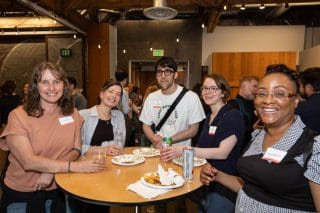
More than 120 job seekers, students, and community members gathered at the Ecotrust Building’s Billy Frank Jr. Conference Center in Portland on Thursday, May 7, for a conversation about one of the most important aspects of the job search: mentorship.
Hosted by Mac’s List and presenting sponsor Portland State University, You’re Not Alone: Using Mentorship to Pivot, Progress, and Land Your Next Job featured a panel of career coaches, HR leaders, and executives:
- Gina Riley, Executive Career Coach, Gina Riley Consulting
- Ed Johnson, Chief Executive Officer – Community Health Centers at OHSU and Board Member of PSU Foundation
- Tia B. Coachman, Founder and Chief Executive Officer at Affirma Consultancy
The evening opened with a welcome from PSU Board Member and Alumni Relations Committee Chair Vera Sell, followed by a panel discussion moderated by Mac Prichard, founder and CEO of Mac’s List
The Biggest Mentorship Myth
The panelists dismantled one of the most common misconceptions about mentorship: that a mentor has to be a seasoned guru handing down wisdom from on high.
“A mentor is not a sage on the stage,” said Gina, borrowing a line from Lisa Fain, CEO of the Center for Mentoring Excellence. “They’re a guide on the side.”
Tia put it even more simply: “Mentors are just people.”
That reframing of mentors as fellow humans, not oracles, was the throughline of the evening.
Ed shared that his first boss in Portland, where he landed a job after a 10-month search, is still his mentor 15 years later. They meet for lunch at a Thai restaurant every few months.
“Look within your community,” he said. “Look at past bosses. You may not think of them because they haven’t been part of your life for a while, but they can bring a lot.”
Knowing the Difference Between a Therapist, Coach, and Mentor
One of the evening’s most memorable frameworks came from Tia, who drew a clear distinction between the three kinds of support people often conflate.
A therapist, she explained, helps you understand how you got to where you are, from past to present. A coach works with you from the present toward a future goal.
A mentor is “in the moment with you,” she said. “They’re sharing what resources they have to offer, what knowledge or skills you might need to develop. But they’re in the moment with you. You just have to identify them appropriately for what you need.”
Gina added that peer mentorship is often overlooked. At nearly 57, she said, one of her most valued advisors is more than 15 years her junior, offering business insights where that person has more experience, while Gina offers parenting wisdom in return. “We co-mentor each other,” she said.
Say the Thing
“You have to say the thing,” Tia said. “No one can say it for you. No one can design it for you. You have to design it — and then you’ve got to say it.”
That means being specific about what you want, what you’re working toward, and what you need from the people around you. “They won’t be invested in you unless you tell them what they’re investing in,” she said.
Gina echoed that with a tip: don’t ask to “pick someone’s brain.” It’s too open-ended. Instead, come with a clear ask and a reason for the conversation.
“If you know what you want,” Tia added, “the steps become easier. If you don’t, you’re shooting in the dark, and people don’t have time for that.”
How to Find and Approach a Mentor
The panel offered plenty of nuts-and-bolts advice for job seekers wondering where to start.
Ed pointed to Portland State’s alumni network as one resource, noting that a PSU alum once reached out to him cold on LinkedIn and he said yes. “You have to be intentional about creating that connection,” he said.
Gina suggested starting with self-reflection: what do you need to learn to navigate your job search more effectively? That question tells you who your mentors should be. “Just because someone is a great mentor doesn’t mean they’re the right mentor for you — for what you need today.”
The panelists also encouraged attendees to look beyond the obvious: professional associations, nonprofit boards, volunteer opportunities, and even the gym. “Mentorship can happen in a lot of different places,” Ed said. “It might be hiding in one place you’re already in.”
And for those wondering what to say once you’ve found the right person, Gina shared a line from someone she’d interviewed who navigated a tough career transition: “I just want you to help me get smarter about how I’m making this transition. I’m tapping into your wisdom to do it.”
Simple, direct, and easy to say yes to.
As a Mentee, You Own the Relationship
One point the panelists returned to: the mentee drives the relationship, not the mentor.
“Bring structure,” Gina said. “Write down your goals. Know what advice, support, and information you’re seeking. Show up with an agenda.” That means having a reason for the conversation and being prepared to make the most of the time.
Ed added that most people who are considered mentors don’t even think of themselves that way. “They’re just someone people trust and keep coming back to,” he said. “The people who keep coming back are the ones who know what they want.”
And for those worried they have nothing to offer in return, the panel pushed back on that.
“We all have something to offer,” Gina said. It might be a relevant article, an introduction, a different perspective, but the reciprocity is there if you look for it.
The Panel’s Top Advice for Right Now
To close the formal conversation, Mac asked each panelist for their most important takeaway for job seekers navigating today’s market:
- Tia: Stop comparing yourself to everyone else. “You can’t believe you’re the baddest thing walking if you believe everyone else is badder than you,” she said. “What would you do in your sleep? What would you do for free? What do you love doing? What is reciprocal to you?”
- Ed: Show up. Half of it is just being there. Work your network, get out into your community, and don’t give up.
- Gina: “You have a unique value proposition. So own what yours is in this ecosystem because we all have one, and that is how you stand out.”
Stay Connected With Mac’s List
A big thank you to our presenting sponsor, Portland State University, to our Gold Sponsor Gina Riley Consulting, to our Silver Sponsor Edward Jones – Financial Advisor: Christopher R. Cervetto, to our tabling organizations, Nonprofit Association of Oregon, PDX WIT, Uplift Leadership, Portland State University, and Young Nonprofit Professionals, and to our volunteers, Wendy Popkin, Elliana Pastrano, Logan Rosell, and Melissa Jones.
Here is an album of event photos, thanks to our photographer, Celina Flores.
Mac’s List will host two more events in 2026: one for job seekers on Thursday, Sept. 24, and one for employers on Thursday, Nov. 5. A podcast episode of the May 7 event will be released on Monday, June 8.
In the meantime, you can:
- Visit our Luma page to learn about our latest quarterly event.
- Explore hundreds of local job listings on the Mac’s List job board
- Subscribe to our free weekly newsletter for new jobs every Tuesday
- Dive into career advice articles and the Find Your Dream Job podcast for practical tips from experts like our panelists