How to Build Your Best Team: Hiring Advice From Portland Leaders
Share
Frank So used to interview job applicants at Costco. Later, he’d run into them around town. Even if they didn’t get the job, they still loved Costco, and often applied again.
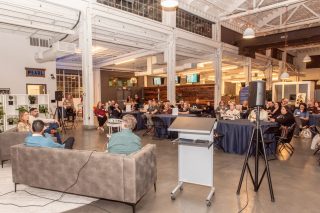
Frank, now CEO of Oregon Humane, shared that story with more than 50 leaders from nonprofits, B Corps, and mission-driven businesses at Internetworks on Thursday, Nov. 5.
It was one of many lessons from an evening packed with advice on how to find, attract, and keep great employees.
Mac’s List hosted Build Your Best Team Through Better Hiring Today with presenting sponsors Nonprofit Professionals Now and A to Z Staffing. Agnes Zach, CEO and owner of both firms, kicked off the night with a welcome.
Then Mac Prichard, founder and CEO of Mac’s List, led a conversation with three panelists who see hiring from different sides of the table:
- The recruiter: Enrique Ruiz, founder and chief talent agent of STRM Recruiting
- The executive search pro: Jenny Wright, director of executive search and business development at Mulberry Talent Partners
- The hiring CEO: Frank So, CEO of Oregon Humane
Start With a Process
Many employers don’t have a documented hiring process. They post a job and hope for the best, or they reach out to people they already know.
Enrique said candidates notice this lack of structure during hiring. And it can signal to applicants that things are stressful on the inside.
The fix doesn’t require a big applicant tracking system or a team of recruiters. Panelists suggested small steps:
- Document your process in a shared spot, such as a SharePoint site or an Excel spreadsheet.
- Track where you post each job and which channels work best for each role.
- Get prepared and set up a structure before you need to hire.
The Candidate Experience Can Help (or Hurt) Your Brand
Frank said a brand is more than a logo or a tagline. “A brand is the prestige, it is the recognition, it is the history, and it is the future of the organization,” he said.
A bad hiring experience reflects on the whole brand and the mission. He urged employers to ask themselves a hard question: Are we the best organization we can be?
“I think it goes both ways,” he said.
Jenny added that the candidate experience starts earlier than most employers think. It doesn’t begin when you post a job or when people start to apply. It begins with how your organization shows up long before then.
Tell Your Story Online
Enrique said that after the COVID years, companies need to own what they offer. Candidates need to know what they want, too.
His low-effort, high-reward tip is to build a strong LinkedIn profile for your company.
- Share what you offer and what you do.
- Post on a regular schedule so people get to know you.
- Pay attention to how your voice comes through.
When candidates understand your company, culture, and strategy before they apply, everyone wins.
Look Beyond Your Usual Network
Frank hired for a senior role at his organization earlier this year. He admitted he could have done more on LinkedIn or reached out to people he knew. Instead, he looked at the market. Many talented people were losing jobs in the federal government.
So he contacted people in his network and asked, “Who do you know with this profile?” He had five or six names right away.
The person he hired came from Washington, D.C., where they had managed $430 million.
“So yes, do your LinkedIn, know your networks,” Frank said. “But also, there is another market out there.”
He also urged nonprofit leaders to tap their boards. If you recruit board members to represent communities, ask them to help you reach those communities when you hire.
For example, during Frank’s time at Ecumenical Ministries of Oregon, the organization reached out to churches in historically Black neighborhoods and asked who they knew.
Be Specific About Who You Want
Frank isn’t a fan of general job listings. Tell candidates what the job involves, including the hard parts. The people who still want it after that are the ones you want to hire.
“Be specific,” Frank said.
Look for Energy, Not Extroversion
Enrique pays attention to a candidate’s energy in an interview, whether it’s virtual or in person. He wants the person who wants the job.
That doesn’t mean only extroverts succeed. He shared advice from his mentor: Everyone needs 20 seconds of courage every day. Introvert, ambivert, or extrovert, you can find that courage to show up and make an impression.
Don’t Get Dazzled
Jenny offered a counterpoint. Some candidates are charismatic, but they don’t always produce results once you hire them.
Her advice:
- Ask everyone the same questions. Judge each answer against the same criteria.
- Listen for context. Look for substance in a candidate’s stories.
- Watch for deflection. Some candidates answer a question with a question. Remember what you asked in the first place.
Enrique added that employers should be clear about what they want. If you want direct answers, tell candidates. Share the topics you plan to cover ahead of time.
“Set them up for success,” he said. That isn’t giving away the answers to a test. It makes the process fair for both sides.
Frank said he looks for skills first. After that, “I’m hiring for attitude,” he said. He looks for two traits:
- Humility. A humble person listens and works well on a team.
- Hunger. A hungry person wants to do more.
Both traits show up in introverts and extroverts alike.
Your Questions, Answered
Attendees brought great questions. Here’s some of the advice panelists shared:
Using behavioral assessment tools: Enrique said if you use one for one role, use it for every role. Everyone should have the same experience.
Telling candidates no: Jenny said to give an honest explanation. You don’t owe every detail unless it would help the candidate. Think about the experience you’d want and share the news in a positive way. Frank said there’s a difference between being nice and being kind. Thank candidates for what they gave to the process, show you care, and explain how this decision helps them find the right role. He tries to flip the lens from feeling bad to feeling good about helping someone land in the right place.
Shifting candidate expectations: Jenny sees more candidates ask for flexibility, such as fully remote work. Frank said the pandemic changed how many people think about work. In his field, a veterinarian in private practice may work three days for the same salary as one in shelter medicine who works five. Technology can help, he said, but it won’t fill the gap. Enrique said to look for transferable skills. Many companies are trying to do more with less, so look for people who can do the same.
Helping candidates prepare: Jenny shares interview questions ahead of time and asks candidates to tell stories. This helps those who need time to come up with examples. It also reveals flashy answers with no substance behind them. And she prepares as an interviewer, too.
Hiring for character: For leadership roles, Jenny said culture and attitude can matter as much as functional skills. “You can’t teach character,” she said. Frank added that he’d like interviews to feel more like conversations than checklists. That’s how he gets to know the real person.
The Panel’s Top Advice for Building Your Best Team
To close the formal conversation, Mac asked each panelist for their number one hiring tip:
- Jenny: Be prepared. The candidate experience starts with how your brand shows up and extends to the day a new hire walks through the door. Too many managers focus on filling a seat and aren’t ready for the employee’s first day. Set your new hire up for success with the tools, resources, and onboarding they need.
- Enrique: Share as much as you can in your job posting. Tell your story, and make sure it’s real. Know the kind of person you want to reach. That will help you get closer to the mark.
- Frank: Talk about your vision, not just the technical skills. If people don’t buy into your mission, they’ll be unhappy and leave, and you’ll be hiring again in six months. A clear vision inspires the right people to apply and weeds out those who aren’t a match.
Stay Connected With Mac’s List
A big thank you to Agnes Zach and our presenting sponsors, Nonprofit Professionals Now and A to Z Staffing, and to our venue sponsor, Internetworks, for hosting us.
Thank you to our gold sponsors, Mulberry Talent Partners and STRM Recruiting; our venue sponsor, Internetworks; our silver sponsors, Gibbs HR Consulting, The Lund Report, and Xenium HR; our community partners, the Nonprofit Association of Oregon, On Purpose Oregon, Partners in Diversity, and the Portland Human Resources Management Association; and our wonderful volunteers, Wendy Popkin, Elliana Pastrano, and Logan Rosell.
Here is an album of event photos, thanks to our photographer, Andie Petkus.
A bonus episode of the “Find Your Dream Job” career podcast featuring event audio will be released on Monday, Dec. 7.
In the meantime, you can:
- Post your openings on the Mac’s List job board to reach candidates across Oregon and Washington.
- Explore free hiring and career advice on our website.